
How to Check Criminal History in Central City
Start with the event, not a broad name search. Central City Police is the first custodian for its own incident and arrest reports. The municipal clerk handles city ordinance and local traffic matters. Gilpin Combined Court holds state cases arising in the Gilpin portion, while Clear Creek channels may apply across the county line. A statewide CBI record is a later cross-check, not a replacement for the source file.
- Confirm the street, venue, responding agency, and approximate date.
- Ask Central City for the city-created police report or municipal record.
- Determine whether the charge is municipal or filed under state law.
- For Gilpin custody, call the detention facility; for a filed Gilpin case, use Combined Court.
- Use Colorado ICHC only when a statewide fingerprint-linked history is needed.
That order keeps a request from going to the wrong county or office. The broader Gilpin County criminal history overview explains the county and state layers without replacing the Central City route.
Central City Records Cross a County Line
Central City is Gilpin County's seat and its larger incorporated municipality, but part of the city extends into Clear Creek County. The 2020 Census total of 779 covers the whole municipality, not just its Gilpin portion. That boundary matters more than the city name on an address. A call for service on one side may create a Gilpin court and detention trail, while an event on the other side can require Clear Creek records.
Before searching, write down the exact location and ask which agency responded. If a case number is known, its filing court is another strong clue. Do not assume that every Central City arrest enters Gilpin Detention or that every state charge appears at Gilpin Combined Court. Official municipal mapping is useful context, but the responding agency and clerk should confirm the actual route.
A county name in a search form is not enough when the municipal boundary crosses counties. Confirm whether the address fell within the Gilpin or Clear Creek portion on the incident date, then ask the police or clerk where the case was referred. This check can prevent a false conclusion that no record exists merely because the wrong county returned no match.
The Central City Police Department
Central City Police Department holds records it created, including releasable incident and arrest material. The city’s official forms index lists an Open Records Request and Open Records Policy, but the available research could not verify police-specific form fields, a flat report fee, identification rules, or a guaranteed turnaround. A careful requester should call City Hall, identify the police record sought, and ask for the current form and submission instructions.
Describe the event by date, time range, place, involved agency, report type, and case or incident number if known. Ask whether the record is treated under the Colorado Criminal Justice Records Act rather than the general city records process. That distinction affects access and redaction. Victim, child, juvenile, medical, security, and active-investigation information may be withheld or masked.
Central City Hall
141 Nevada Street, PO Box 249
Central City, CO 80427
303-582-5251
Monday through Thursday, 8:00 a.m. to 5:00 p.m.
Central City Open-Records Starting Point
The Central City forms and permits page is the verified city starting point for its Open Records Request and policy. It does not justify assuming that every police file is open, that a request is free, or that the city promises a fixed response time. Confirm the creating department and ask for a cost estimate before authorizing research.
The official Central City forms index shows where the city publishes current request materials.
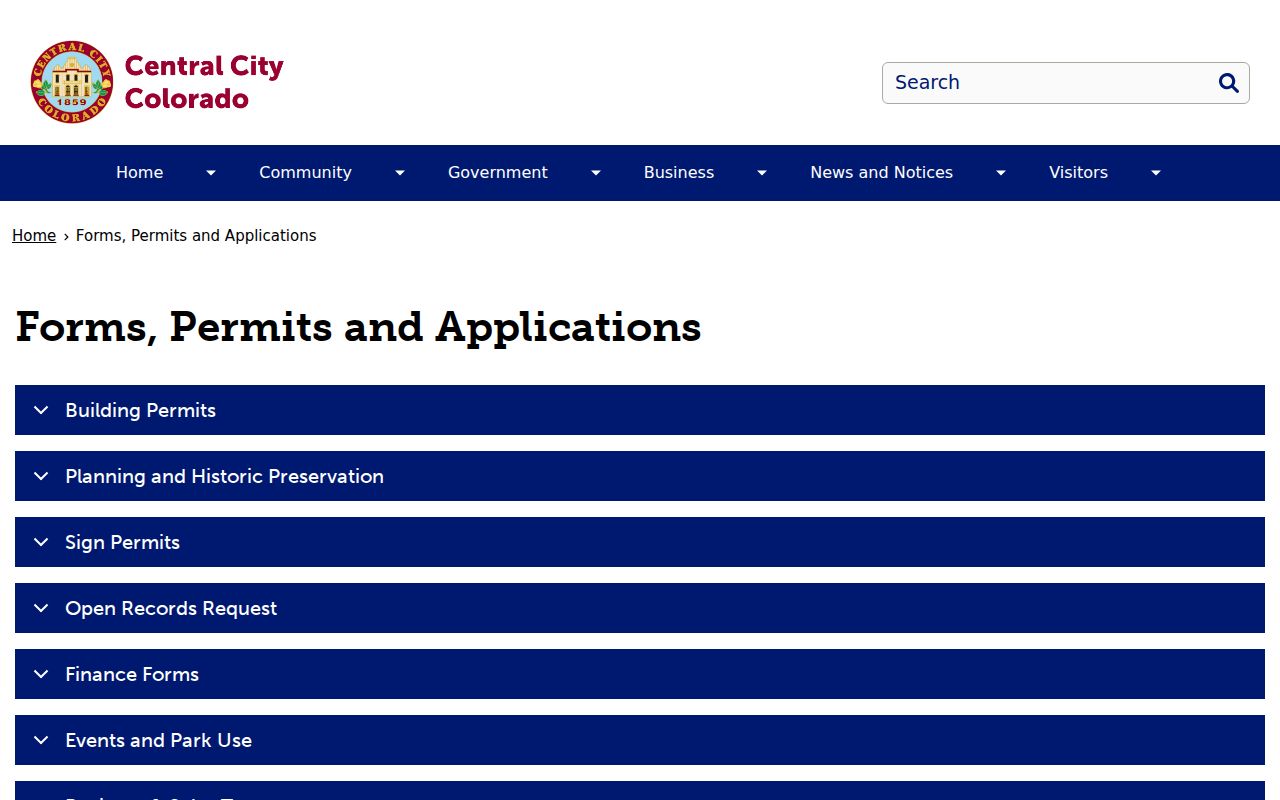
Using the live city index avoids relying on a stale copy of a form or policy.
A city administrative request is not a substitute for a court-document order. If the desired item is a complaint, disposition, sentence, or register of actions, contact the filing court. If it is current custody, contact the holding jail. Central City should not be asked to recreate records maintained by another custodian.
Arrests and Bookings in Central City
Central City advertises no separate city jail. For an arrest in the Gilpin portion, the verified current-custody route is Gilpin County Detention at 303-582-3576. A phone answer is a present snapshot. Someone who has been released may no longer be confirmed in custody even though Central City Police retains an arrest report and the court later opens a case.
Three timeframes must stay separate. The police report describes the event and initial allegations. Detention records describe intake, holds, bond, release, or transfer. The court complaint shows what prosecutors actually filed, and the disposition gives the outcome. Initial arrest allegations may change or never become charges. For a deeper county booking explanation, use the Gilpin County arrest history resource.
Note: Confirm the county side of the arrest before treating Gilpin Detention as the correct custody office.
Central City Police and Sheriff Differ
Central City Police and the Gilpin County Sheriff are separate record custodians. A city officer's narrative begins with Central City. A sheriff-created report begins with Sheriff Administrative Services. Court pleadings belong to the clerk, and the CBI statewide criminal history is another product entirely. Sending one broad request to the sheriff can miss the city record.
| Central City record | Best first office | Second check |
|---|---|---|
| City incident or arrest report | Central City Police through City Hall | Filing court |
| Municipal citation | Central City Municipal Court | City police report |
| Gilpin state charge | Gilpin Combined Court | Central City Police |
| Current Gilpin custody | Gilpin Detention | Issuing court or police |
| Statewide Colorado history | CBI ICHC | Source agency or court |
This division reflects who made the record. It also explains why a city request can be valid yet return no court order or jail status.
Central City Municipal Court Records
Central City has a municipal court, but no verified public case-search portal was located. Use the city or court phone and counter to confirm the current clerk, schedule, request method, copy fee, and available docket details. Municipal records concern city-level matters. State felonies and misdemeanors do not become municipal cases merely because Central City Police made the arrest.
| Court name | Central City Municipal Court |
|---|---|
| Case scope | City ordinance and authorized local matters; confirm current jurisdiction with the clerk. |
| Lookup channel | Telephone or city counter; no verified public portal. |
| State cases | Use the proper county combined court based on event location. |
| Copies and fees | Call to confirm; no verified municipal fee schedule was available. |
A municipal citation, police incident report, and state complaint can stem from related conduct yet remain separate files. Ask for the exact product rather than “everything on a name.”
Central City Court Files Leave City Hall
When a Central City matter becomes a state case in Gilpin County, complaints, hearings, pleas, dispositions, and sentences are held by Gilpin Combined Court at the Dory Hill Justice Center. The clerk is in Suite 200 and can be reached at 303-582-5522. The Judicial Branch docket displays scheduled hearings, not a complete case file. A record request can seek the complaint or information, register of actions, and disposition or sentence order.
City Hall cannot certify a Judicial Branch document it does not maintain. Likewise, the Gilpin clerk does not hold the full city police narrative. For a reliable outcome, read the disposition count by count because one allegation may be amended or dismissed while another ends in conviction.
Where Central City Records End Up
A Gilpin-side Central City event may produce several linked records. Police keep the incident and arrest narrative. Detention holds the intake and current-custody file. The First Judicial District court holds state pleadings and orders. Properly matched fingerprints and dispositions can later reach CBI.
Record flow: Central City Police › Gilpin County Courts › Colorado Bureau of Investigation
That flow is not instant. A same-day CBI search is a poor way to verify a new arrest. Call detention, contact Central City Police, then watch the court docket over following business days. Use ICHC later as a statewide cross-check.
Central City History Splits Record Geography
Central City's gold-rush identity and county-seat role center civic history around the old county government buildings. Modern criminal justice operations are concentrated near Black Hawk at the Dory Hill Justice Center. County commissioners may meet at the historic courthouse on Eureka Street while court, sheriff administration, and detention records are maintained elsewhere.
The official Central City homepage provides the city's current government gateway and local setting.
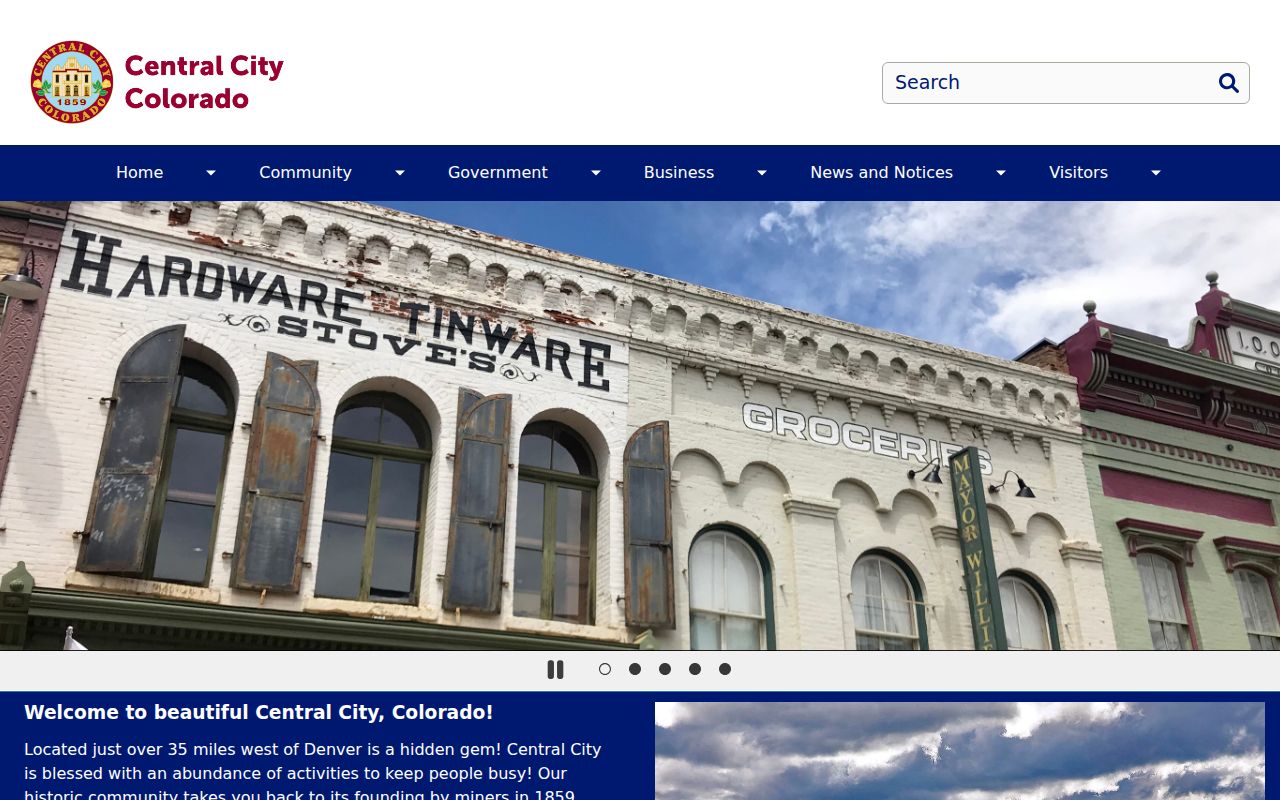
The image reflects the civic center, while the record route still depends on which office created the file.
Public Access Rules for Central City Records
Colorado uses two related laws. The Colorado Open Records Act, CRS 24-72-200.1 and following, governs many city administrative records. The Colorado Criminal Justice Records Act, CRS 24-72-301 and following, more specifically governs criminal justice records. “Official action” records receive different treatment from discretionary investigative material. A custodian may redact or withhold protected juvenile, victim, medical, security, or active-investigation content.
Key statutes:
Colorado Open Records Act governs access to many public administrative records.
CRS 24-72-301 et seq. sets the criminal-justice-record framework.
CRS 24-72-305(5) allows withholding of certain investigatory records when disclosure would harm the public interest.
If access is denied, ask for the statutory basis in writing. A targeted request with a clear event, date, place, agency, and record type is easier to review than a broad demand.